Key Takeaways
- The planting season brings unpredictable weather, but there are valuable opportunities for Drone Work Before Planting.
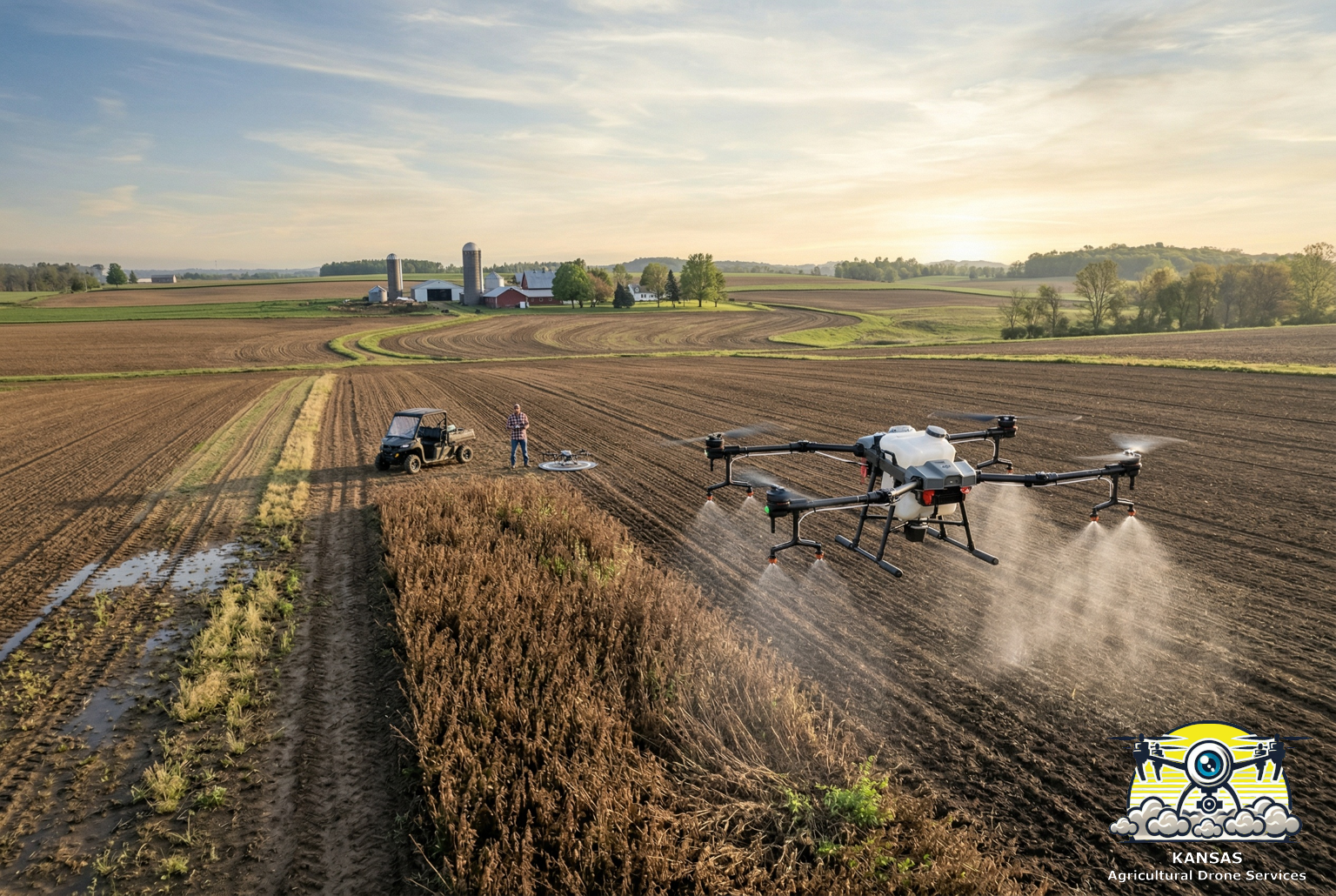
- Drones excel at pre-plant applications like burndown herbicides, pre-plant fertilizers, and pest treatments without damaging wet soils.
- Using drones for targeted applications saves money and ensures inputs reach the most deficient areas of the field.
- Scouting fields with drones can reveal critical information about drainage issues, winter damage, and soil conditions before planting.
- Planning drone flights during calm, early morning conditions enhances application accuracy and effectiveness.
Planting season has arrived. One week we are watching the forecast and waiting for soils to warm, and the next we’re running flat out trying to get everything in the ground before the weather window closes. And the 2026 weather has been crazy! In Northeast Kansas we had -12 degrees to 98 degrees in five days, and then back to the 30’s, and then back to the 60’s. Ugh. What can we do to distract ourselves? Can we pursue drone work before planting to get ahead of things? What is there to do?
There is a lot.
Many of us may think of our agricultural spray drone as an in-season tool, something pulled out when a fungicide application is due or a pest pressure flares up mid-summer. And it’s great for that. However, the pre-plant window offers a surprising number of high-value opportunities that can set up our fields for a better season before a single seed is planted. This article goes over how I think about it.
Start with Burndowns and Cover Crop Termination
If there’s one application that pays the biggest dividends in late March is burndown herbicide work. Whether you’re managing winter cover crops or just dealing with existing weed pressure that got ahead of you, terminating that vegetation cleanly before planting is critical — and the drone is a genuinely better tool for this job than you might expect.
The obvious advantage is compaction. Spring soils are often too wet to support ground equipment safely, but they’re no obstacle at all for a drone. You can fly fields that a tractor or sprayer would tear up, getting your chemistry down on time without sacrificing soil structure or creating ruts you’ll be dealing with all season. There’s also a precision advantage — you’re putting product exactly where it needs to go, at the right rate, without the overlap and waste that can come from ground rigs working irregular field shapes.
The timing of cover crop termination matters. Terminate too early and you lose soil protection; too late and that cover crop becomes competition for your cash crop or complicates planting. A drone gives you the flexibility to hit that window precisely, even when field conditions are marginal.
Pre-Plant Fertilizer and Variable Rate Applications
If you’ve done fall soil sampling now is a good time to act on what that data is telling you. Liquid fertilizer, micronutrient, and biologic applications can be made before planting based on prescription maps built from your soil test results, and this is one of the areas where drone application really distinguishes itself.
Rather than making blanket applications across the whole field, you can target deficient zones specifically. Low-pH areas get lime suspension. Iron-deficient patches get chelated iron. Zinc-deficient ground gets zinc. You’re putting inputs where they’re needed and holding back where they’re not, saving money and avoiding the yield drag that comes from over-applying in areas that don’t need it.
Variable rate application requires a little more planning: You need prescription maps built from your sampling, but for farmers who already have that data in hand, the drone is an excellent tool for executing those prescriptions quickly and accurately. If you’re not already doing grid or zone soil sampling, this is a good reason to start.
Get Ahead of Pest and Disease Pressure
One of the most underappreciated pre-plant strategies is using this window to address known pest and disease problems before they can take root with your new crop. If you have fields with a history of soil-borne disease such as Pythium, Rhizoctonia, or similar, a pre-plant fungicide application can reduce the inoculum load in the soil before your seedlings are even vulnerable. It’s much easier to manage these problems before the crop is there than to respond reactively mid-season.
The same logic applies to soil insects. Fields with documented wireworm or grub pressure are candidates for pre-plant insecticide treatment. Nematodes are another example. If you’ve had confirmed nematode pressure in a field, a nematicide application before planting gives you a head start on protection that in-furrow treatments alone may not fully cover.
None of these applications are universally necessary, and I’m not suggesting you spray everything “just in case.” But if your field history tells you there’s a problem, the pre-plant window is when to address it. The drone makes it economical to treat specific areas of a field rather than the whole thing, which matters when you’re talking about products that can carry a real cost per acre.
Scout Your Fields Before You Commit to a Plan
I believe in proactive crop scouting. Consider using your pre-season flight time to scout. Many spray drones are equipped with cameras capable of capturing meaningful field imagery. There are also dedicated options that include useful multispectral cameras that can produce a wealth of information about field conditions. Flying fields before planting can tell you a lot about what you’re working with.
After a rain event, a flight over your fields will reveal ponding patterns, low spots, areas where drainage is failing, and places where compaction is holding water. That information is actionable! You can address tile line failures, make decisions about where to prioritize tillage, or adjust your planting plan to account for problem areas rather than discovering them after the fact. Spotting a drainage problem in late March is far better than watching a low spot drown out a stand in May.
Early season flights can also reveal winter damage to perennial crops, erosion from freeze-thaw cycles, or residue distribution problems that could affect planting uniformity.
Practical Notes for Spring Flying in Kansas
Pre-plant work in late March and early April comes with some operational reality’s worth keeping in mind. Wind is always the primary enemy of accurate spray application, and spring in northeast Kansas is not known for calm conditions. Early morning flights — before the wind picks up — are almost always your best window for quality applications. Plan your days accordingly.
Temperature and soil conditions may also matter based on the product you’re applying. Pre-emergent herbicides or biologics often require soil temperatures in a specific range to activate correctly, so coordinate your application timing with soil temp data rather than just calendar date. And if you’re applying anything that needs to be incorporated by rain, keep an eye on the forecast so you’re not waiting weeks for activation.
Finally, if you’re flying burndown applications near field edges or shelter belts, take the time to map your boundaries carefully before you fly, and use strategically plan your flight in relation to the wind.
The pre-plant window is short, and there’s always competition for your time and attention. But a spray drone gives you a tool that can keep working even when field conditions say the tractor stays parked. Used well, these early applications can meaningfully improve the foundation you’re planting into — and that’s a head start you’ll notice come harvest.
If you have questions about pre-plant applications or want to talk through what might make sense for your operation, reach out. That’s what I’m here for.