Key Takeaways
- Agricultural drones can qualify for the U.S. Section 41 R&D Tax Credit by improving farming processes.
- Farmers may qualify more than they realize, especially when testing new seed varieties and crop protection methods.
- Documenting experiments is essential; it ensures that drone usage meets IRS requirements for tax savings.
- Hiring professional drone operators can also qualify as contract research expenses under Section 41.
- Overall, using drones for experimentation can significantly reduce costs and potentially save farmers $20,000 to $300,000 in taxes.
Let me start by reminding you: I am NOT a tax expert. This is just my point of view, and if you want to find out how agricultural drones can reduce your tax, you may want to read this… and even print it out to discuss with your accountant.
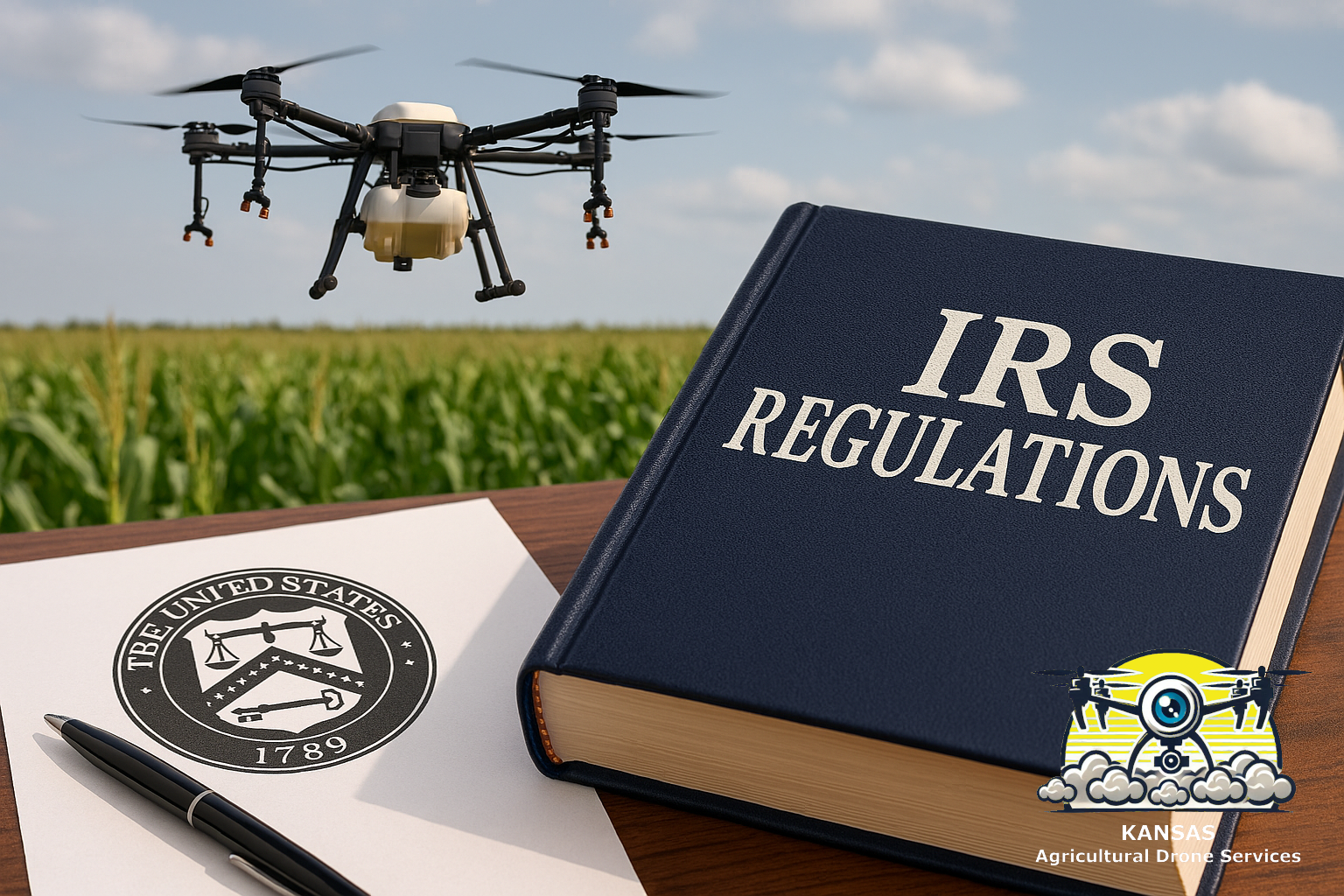
I was familiar with the R&D tax credits used in architecture and construction. Honestly, I may not have understood section 41 and agriculture unless my friend, Eugene Punelli at virelo.ag hit me up with his facebook post about section 41. I did some more reading about things so that I can share this with you, my farm friends: Use of agricultural drones for crop scouting and spraying, or planting cover crops, may also qualify for the U.S. Section 41 Research & Development (R&D) Tax Credit.
This was a surprise to me. Maybe you also had thought that something as exotic as a tax credit was available only for tech companies or large organizations. Not so! Here is what I found about how drones can reduce your tax…
What Is the Section 41 R&D Tax Credit?
The R&D credit is a federal incentive designed to reward businesses that test new ideas or improve their processes. The official law is found in:
- Cornell Law School: 26 U.S. Code §41 – Credit for Increasing Research Activities
- IRS Guidance: IRS Research Credit Overview
My review on this is that the credit allows a business (your farm) to reduce its tax bill when it spends money on qualified research activities. These activities must involve:
- Improving a product or process (farming)
- Using science or engineering (agronomy counts!)
- Eliminating uncertainty (narrowing down options)
- Running an experiment (confirming the options are right)
Trying new ideas is not new to farming and it sounds a lot like what I overhear farmers talking about in the diner. Testing ideas happens all of the time, whether it is a new chemical, a new machine, or a new way of doing things (cover crops into corn?)
How Section 41 Applies to Farming
I think that farmers qualify more often than they realize. I found a 2024 FarmProgress article highlights that many common farm trials meet the IRS definition of R&D, including:
- Testing new seed varieties
- Trying new crop protection products
- Trying new methods to reduce chemical use
- Experimenting with soil fertility programs
- Evaluating new scouting methods
- Evaluating new application methods
The key is documenting what your planning including your intent. You must be testing something, measuring results, and trying to improve your outcomes.
Hiring Drone Services Can Qualify for the R&D Tax Credit
If you don’t own your own drones, you may want to consider hiring a professional drone operator for crop scouting, NDVI mapping, and precision variable-rate application or (better yet) spot spraying. These services can significantly reduce input costs, improve crop health, and increase yield, all while supporting the kind of structured experimentation that may qualify under Section 41 when properly documented.
1. Drone Scouting Identifies Problems Early
Hiring a drone operator gives you fast, full‑field coverage and high‑resolution imagery that highlights issues long before they’re visible from the ground. NDVI and multispectral maps can reveal:
- Early disease pressure
- Weed outbreaks
- Nutrient deficiencies
- Water stress
Using a crop health index, such as NDVI, is (probably) a new way for you to scout and allows you to identify select areas for treatment — not the whole field.
2. NDVI Maps Support Precision Decisions
NDVI (Normalized Difference Vegetation Index) is especially valuable for identifying subtle differences in plant vigor. When used as part of a structured trial — such as testing fungicide timing, evaluating biologicals, or comparing hybrids — NDVI data becomes part of the process of experimentation required under Section 41. Very clearly, to me, use using drones like this can reduce your tax!
3. Spot Spraying With a Spray Drone Cuts Chemical Costs
Spray drones excel at spot‑treating problem areas. Instead of applying chemicals across 100% of the field, a drone can precisely target:
- Disease‑infected patches
- Weed‑dense zones
- Nutrient‑deficient areas
- Stress hotspots caused by soil variability
This often reduces chemical use by 30–70%, depending on field conditions. It also reduces runoff and nitrate pollution.
4. Hiring Drone Services Is Often Cheaper Than Doing It Yourself
One process-improvement experiment may be to apply micronutrients or fungicide by drone to test effectiveness. As a test, you may wish to hire the service. When you hire a drone operator, you’re paying only for the service — not the drone, batteries, licensing, insurance, software, maintenance, or training. In most cases, the chemical savings alone cover the cost of the service, and the yield increase is additional profit.
5. These Costs May Be Eligible for the R&D Tax Credit
When drone services are used as part of a documented experiment — such as testing new application methods or evaluating new products — the cost of hiring the drone operator may qualify as a contract research expense under Section 41 (typically counted at 65% of the cost). The use of the drone can reduce your tax! Reducing your application costs while seeing less loss and higher yields is just icing on the cake.
Ideas for Using Spray Drones Under Section 41
Below are relevant R&D categories and how drone‑based activities may fit them.
A. Testing New Application Methods
FarmProgress notes (here and here) that evaluating novel crop protection strategies and soil fertility methods has historically qualified.
A spray drone could be part of such trials if you are:
- Comparing droplet sizes
- Testing drift‑reduction methods (including new adjuvants)
- Evaluating coverage uniformity
- Measuring efficacy differences between drone vs. ground rig
- Experimenting with variable‑rate aerial application
- Making equipment modifications to improve efficiency
B. Developing or Improving Processes
Examples include testing whether:
- Drones improve fungicide timing
- Drone application reduces soil compaction
- Drones reduce chemical use while maintaining efficacy
C. Testing New Crop Protection Products
FarmProgress explicitly lists this as a qualifying activity.
This may qualify if you use a drone to apply experimental products in test plots and collect data on:
- Efficacy
- Drift
- Coverage
- Yield response
D. Software or Automation Development
If you or an ag‑tech partner (such as KADS) is:
- Developing custom flight‑path algorithms
- Testing autonomous application logic
- Integrating sensors for real‑time rate adjustment
…these activities may qualify under the software and engineering categories of Section 41.
Ideas for Qualifying Crop‑Scouting Drones Via Section 41
Crop‑scouting drones can support R&D when used in experimental agronomy, not routine scouting.
A. Evaluating New Seed Varieties
Drones may be used to:
- Collect NDVI or multispectral data
- Compare hybrid performance
- Measure stand counts
- Detect early disease differences
B. Testing Soil Fertility Treatments
If you’re experimenting with:
- Biologicals
- Micronutrient blends
- Variable‑rate fertility strategies
…and using drones to monitor plant response, this supports the process of experimentation.
C. Developing New Scouting Protocols
Examples include testing whether:
- Drone‑based scouting can replace manual scouting
- Certain spectral bands improve early detection
- Avoid 2nd or 3rd fungicide application
- Automated image analysis improves decision‑making (This is low hanging fruit)
What Does NOT Qualify
Based on IRS rules and published guidance:
- Routine spraying does not qualify
- Routine scouting does not qualify
- Activities without documentation do not qualify
- Activities without technological uncertainty do not qualify
Documentation Requirements for Drone‑Based R&D
It is super important to document your experiment because IRS scrutiny has been increasing. To meet IRS expectations, I suggest farmers should maintain:
- Written hypotheses (The idea you wish to confirm)
- Trial protocols (How you will test the idea)
- Maps of test plots
- Drone flight logs
- Chemical rates and application parameters (if applicable)
- Imagery and data outputs
- Yield results (if applicable)
- Notes on what was learned and what changed
Financial Impact for Farmers
FarmProgress reports that qualifying farmers have historically seen $20,000 to $300,000 in tax savings depending on the scale of research activities! to Of course, this is only after you’ve spent some money on the process. But it does appear that using a drone is low hanging fruit
Parting Thoughts
Agricultural drones are transforming how farmers scout, spray, seed, and manage crops. And, happily, your use of them may qualify for a federal tax credit that rewards innovation. And, by the way, the credit can be applied to a certain number of past years!
Remember, I’m not a tax expert. You need to talk to your accountant.
But if you’re already experimenting with drones, seed varieties, fertility programs, or application methods, it’s worth finding out whether your work meets the Section 41 R&D criteria, and whether your use of drones can reduce your tax bill.