Key Takeaways
- Weather significantly affects agricultural spraying; it dictates when to plant and spray.
- Spray drones excel in adverse weather, flying when ground rigs cannot, reducing soil compaction and crop damage.
- Understanding wind, heat, humidity, and rain is crucial to avoid common drone mistakes during spraying.
- Operators should plan ahead and monitor conditions to optimize the spray drone weather window and ensure successful applications.
- Smart management of spray drones allows timely interventions, preventing costly mistakes linked to changing weather conditions.
Weather controls everything in farming. Weather decides when you plant, when you spray, and whether you hit the timing window or miss it completely. Spray windows are tight, and they seem to shrink every year. Rain hits fast, wind shows up early, and heat builds when you least want it.
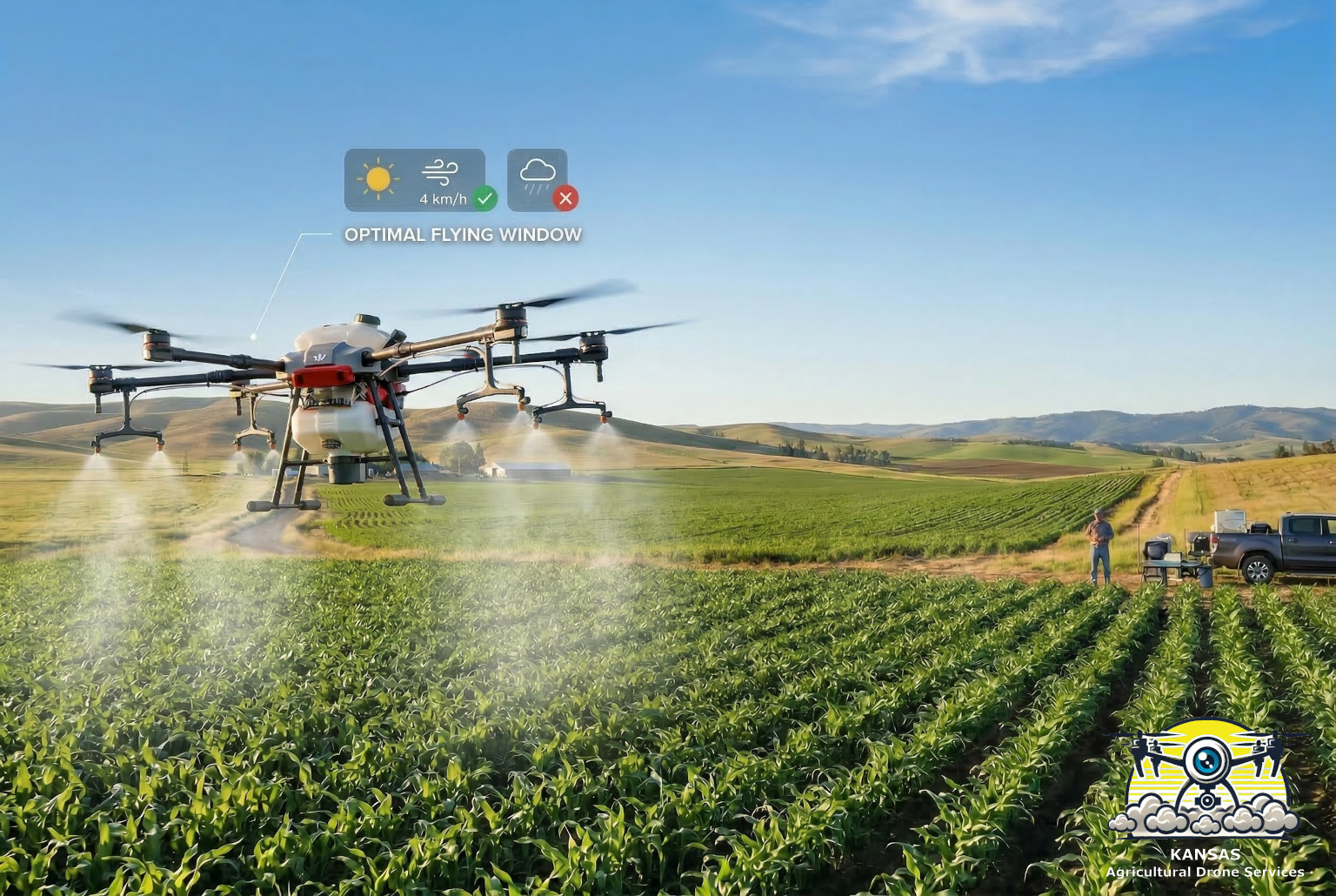
This is where an agricultural spray drone becomes a powerful tool. Drones don’t replace every sprayer on the farm, but they absolutely win when the weather is working against you. They fly when rigs can’t, they reach tall crops without damage, and they help you hit timing windows that used to be impossible.
But weather is also the #1 cause of drone mistakes. Drone fails happen when operators rush or ignore conditions. Drift, poor coverage, battery strain, or uneven spray are likely if you work outside the ideal application window.
This guide explains how weather affects drone spraying and how to use each spray drone weather window to your advantage.
Spray Drones Work with Wet Fields
No Ruts
Applying with ground rigs following a good rain can leave ruts. Sometimes deep ones. Those ruts are campaction. They damage soil structure and can create headaches for years. A drone doesn’t touch the ground. It doesn’t matter if the field is soft, tacky, or still holding water in the low spots.
Spraying with a drone: No compaction. No ruts. No waiting for the top inch to dry.
Faster Access
A drone can be in the air minutes after a storm passes. A ground rig might need a day or two. That difference can make or break a fungicide window or an insecticide rescue pass.
When the field is too wet for wheels, a drone is often the only tool that can get the job done.
Fewer Ground‑Rig Fails
Most “weather fails” in spraying come from trying to push a ground rig into a field that isn’t ready. You get stuck, you leave tracks, or you damage the crop.
A drone avoids all of that. It’s not just faster — it’s safer for the field.
Spray Drones and Wind Limits
Low Flight Helps
Spray drones fly low — usually 8 to 12 feet above the canopy. That low height reduces drift because droplets have less time to move sideways before hitting the crop.
This is a major drone safety advantage over airplanes and even some high‑clearance rigs.
Common Wind Mistakes
Wind‑related drone fails often come from:
- Flying in steady wind over 10 mph, or gusts over 15 mph
- Flying with a tailwind that pushes droplets off target
- Ignoring crosswinds that shift mid‑flight
- Using too fine a droplet size on a breezy day
- Flying too high, increasing drift distance
- Not adjusting flight direction to match wind
These are all preventable with a little awareness.
Heat & Humidity Impact on Spray Drones
Evaporation Risk
Fine droplets evaporate fast in hot, dry weather. If you spray at 2 p.m. on a 95° day with low humidity, you’re losing product before it ever hits the leaf.
This is one of the easiest drone mistakes to avoid:
Don’t spray in the heat of the day unless you absolutely have to.
Humidity Helps Coverage
Higher humidity slows evaporation. Early morning and late evening often give you the best mix of:
- Cooler temps
- Higher humidity
- Lower wind
These conditions help droplets stay intact and improve coverage.
Avoiding Heat‑Related Drone Mistakes
To avoid heat‑related drone fails, follow these simple rules:
- Spray early or late – away from the high noon sun.
- Use medium droplets in hot weather
- Avoid mid‑day flights when possible
- Watch for temperature inversions (evening)
Heat changes everything — droplet size, drift, and coverage.
Spray Drones and Timing Rain
Post‑Rain Advantage
As mentioned above, ground rigs can’t enter the field. But a drone can. This is where drones earn their keep.
Post‑rain spraying is especially important for:
- Fungicide timing
- Insect outbreaks
- Late‑season passes
- Pasture and hayfield rescue jobs
A drone lets you hit the window instead of missing it. And avoid compaction!
Rescue Passes
Sometimes you don’t get a second chance. Corn fungicide windows are tight. Soybean insect pressure can explode overnight. If you miss the timing, you lose yield.
A drone gives you the ability to respond fast — even when the field is still too wet for anything else.
Rain‑Related Drone Fails
Rain‑related drone mistakes include:
- Flying in light drizzle (bad for electronics)
- Flying too soon after heavy rain (visibility issues)
- Launching from muddy ground (slip risk)
- Letting batteries get wet
Rain helps drones access fields — but only if you respect the limits.
Crop Height
Tall Crop Access
Once corn hits tassel height, most rigs can’t get in without breaking stalks. Drones don’t care. They fly above the canopy and never touch the crop.
This is a huge advantage for:
- VT fungicide
- Late‑season insecticide
- Specialty crops
- Seed corn
Reduced Crop Damage
Every tramline is lost yield. Every broken stalk is lost yield. Drones eliminate that damage completely.
Height‑Related Drone Safety Tips
Tall crops create new challenges:
- Prop‑wash can push leaves around (but this is also a benefit)
- Obstacles like pivot towers become harder to see (pre-map them)
- Flight altitude must be consistent
These aren’t drone fails — they’re operator awareness issues.
Drift Control
Weather + Droplet Size
Drift isn’t just about wind. It’s about:
- Temperature
- Humidity
- Droplet size
- Flight height
- Airflow
Drones give you more control over droplet size than most rigs, but you still need to match the weather. For instance, it may be tempting to fly in a fog, but there is no droplet setting that will overcome the diluation!
Avoiding Drift Mistakes
The biggest drift‑related drone mistakes are:
- Flying too high
- Using fine droplets on windy days
- Ignoring temperature inversions
- Spraying during rapid wind shifts
These are easy to avoid with a little planning. Check your weather apps and put eyes on the field to confirm you can fly safely that day.
Safe Spray Windows
A simple rule:
- If the trees are moving, check the wind.
- If the leaves are flipping, don’t spray.
Operator Tips for Spray Drones
Watch the Trees
Trees tell the truth about wind. If the tops are moving, the wind is stronger than your weather app says.
Use Short Missions
Shorter missions give you more control when weather is changing. Set down when that rain cloud is a mile away. Pick back up after it passes!
Avoid Rushing
Most drone fails happen when someone is trying to beat the weather by rushing. Slow down. Think. Fly safe.
Final Thoughts
Weather windows are where spray drones earn their keep. They let you spray when rigs can’t, they help you hit tight timing windows, and they reduce the risk of crop damage and soil compaction.
But weather can also cause drone mistakes if you don’t respect it. Wind, heat, humidity, and rain all change how droplets behave and how the drone performs.
A smart operator watches the weather, plans ahead, and flies with intention. That’s how you get the best results — and avoid the costly drone fails that come from rushing or guessing.