Key Takeaways
- Farmers are comparing spray drone application and ground rigs to understand the benefits.
- Drones minimize spray drift by flying lower and using downwash, while ground rigs create turbulence and have higher boom heights.
- Drones avoid soil compaction entirely, making them especially ideal for late-season treatments without damaging field health.
- Precision spraying is a strong point for drones, allowing targeted applications, thus saving on chemicals and reducing runoff issues.
- Choosing between drones and ground rigs is about selecting the right tool for each farming task.
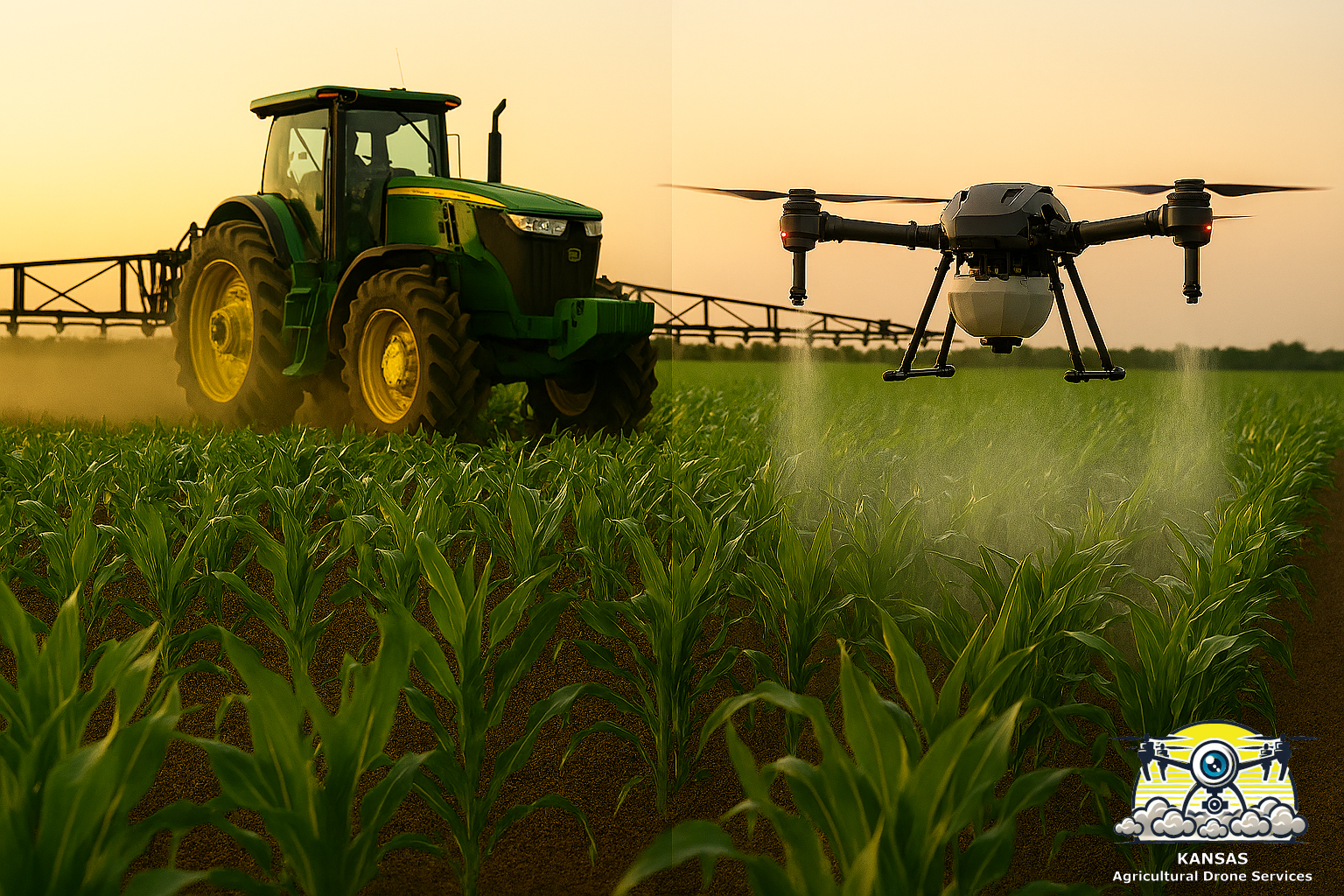
After watching the price of crops rise, and fall, and fall, and fall… any farmer will appreciate ideas that may help gain more yield with less hassle. That’s exactly why so many growers across the Midwest are taking a hard look at drone application vs. ground rigs. It’s not about replacing the old with the new—it’s about having more tools to use when looking at the job to be done. When it comes to spray drift reduction, soil compaction, and precision spraying, drones are earning their place in the shed.
Let’s walk through the comparison the same way we’d talk about it in the shed.
🌬️ Spray Drift: Height, Droplet Control, and Staying on Target
Spray drift is one of those things every farmer wishes could be completely eliminated. Whether you’re running a self‑propelled rig or a pull‑type sprayer, you’re still dealing with boom height, wind shear, and the simple fact that you’re pushing a lot of air across a wide area.
Ground rigs
- Booms sit 60–120 inches above the canopy.
- Traveling 8–15 mph creates turbulence behind the machine.
- Even with good nozzles, drift can sneak up on the driver—especially on hot, dry, breezy days.
Drones, on the other hand, fly low and slow.
- Typical spray height is 7–10 feet above the target.
- Downwash from the rotors can push droplets deeply into the canopy.
- Smaller spray zones mean fewer chances for drift to wander.
That rotor downwash is the secret sauce. It acts like a built‑in air‑assisted sprayer, helping droplets settle quickly and evenly. I personally believe that for spray drift reduction, drones have a natural advantage simply because they disturb less air and stay closer to the crop.
🚜 Soil Compaction: The Hidden Yield Robber
Every farmer knows compaction is a silent thief. You don’t see the damage until the crop starts showing it—or worse, at harvest when the yield monitor tells the truth.
Ground rigs, even the lighter ones, still put thousands of pounds on the soil.
- Running across wet ground? You’re leaving ruts.
- Running across dry ground? You’re still squeezing pore space.
- Every pass is another layer of compaction that roots have to fight through.
The evidence of this is clearly visible when viewed from above, as shown below in an image from my drone scouting in 2025. I haven’t done the math on that field, but people smarter than me have suggested compaction can rob any field of 5% of the yield!

Drones, on the other hand, put zero weight into the field. That means:
- No wheel tracks.
- No ruts.
- No compaction—period.
This is especially handy for rescue passes, late‑season micronutrients, fungicides, or spot treatments after a rain. When the field is too soft for a rig but the crop needs attention, drones keep you moving without sacrificing soil health.
🎯 Precision Spraying: Put the Product Exactly Where It’s Needed
Today, farming is all about precision—why treat 100 acres when only 12 acres need it?
Ground rigs can run section control and variable‑rate, but they still cover wide swaths. If you’re treating patches of weeds, changes in soils, drowned‑out spots, or disease pockets, you’re often spraying more than you need to. Plus, of course, compacting the soil.
Drones excel at precision spraying:
- Fly exact GPS‑guided paths.
- Treat only the zones you map.
- Hit small areas without overspray.
- Perfect for imagery‑based prescriptions.
Whether you’re applying micronutrients, fungicides, biologicals, or herbicide touch‑ups, drones let you target the problem instead of blanketing the field. This saves money on chemicals and reduces runoff issues. A win / win!
⏱️ Efficiency: The Right Tool for the Right Job
Ground rigs still shine for big, open fields and full‑field passes. Especially early in the season. They carry more product, cover more acres per hour, and remain the backbone of most operations.
But drones bring efficiency in a different way:
- No waiting for fields to dry.
- No compaction delays.
- No wasted product on unneeded acres.
- Quick deployment for small or urgent jobs.
You could think of drones as the sprayer equivalent of a side‑by‑side: not meant to replace the tractor, but incredibly handy for everything in between.
🌾 Final Thoughts
I want to be clear: I don’t think that the discussion of a spray drone vs ground spraying is about picking a winner—it’s about matching the tool to the task. Ground rigs still rule the very big acres. But drones are carving out a valuable role where precision, timing, and field conditions matter most. And just wait for the larger drones to arrive… who knows what we will be covering next year!