Key Takeaways
- Drones and precision tools provide visibility but create risks of data theft, making it crucial to protect farm data.
- Account takeovers, unencrypted transfers, and insider risks are major threats to farm data security.
- Farmers should enable multi-factor authentication, limit administrative access, and encrypt sensitive information.
- It’s important to audit vendor contracts and ensure data ownership and deletion rights are clearly stated.
- Taking immediate action, like using a password manager and checking encryption standards, is vital to protect farm data.
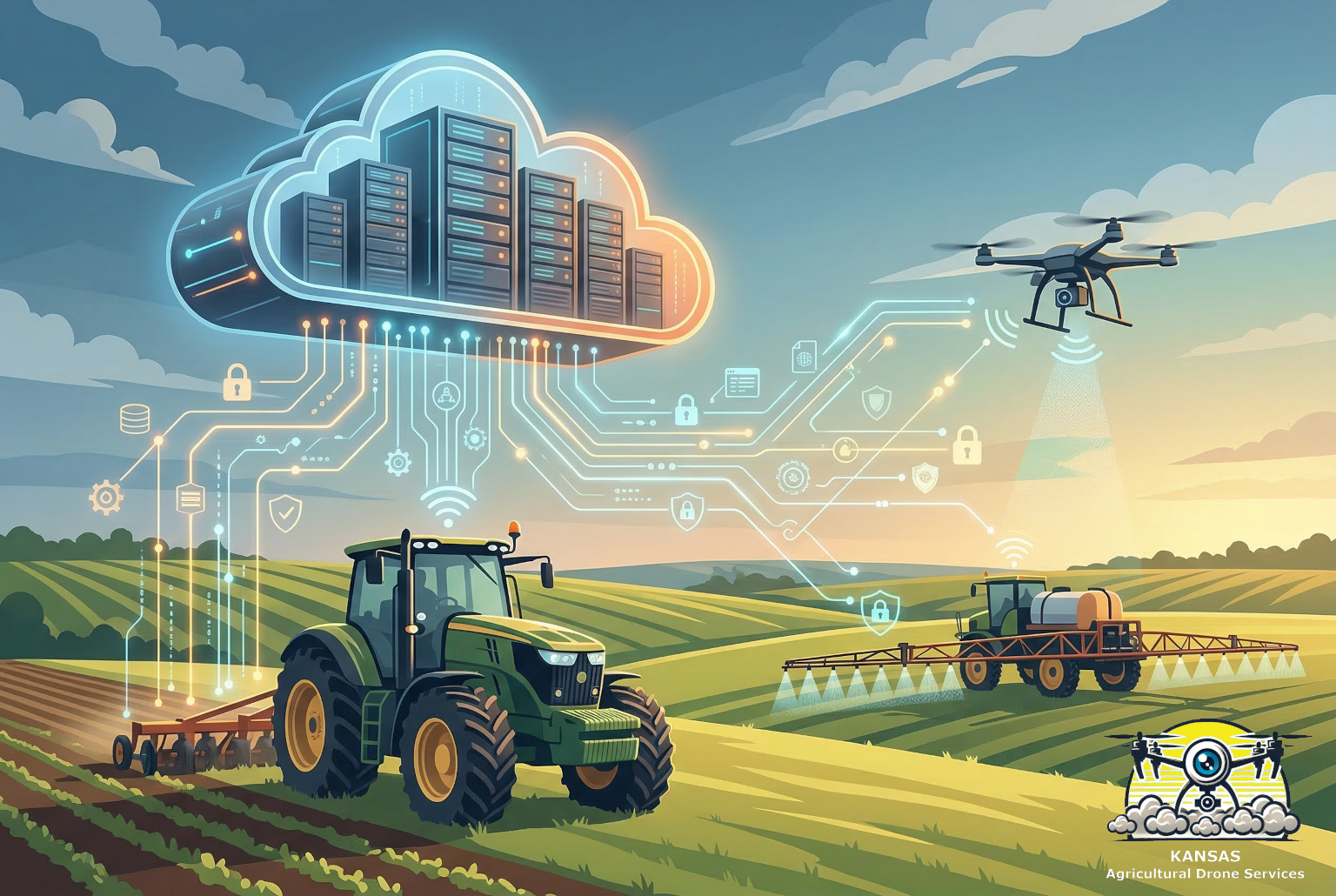
Drones, sensors, and precision platforms give farmers unprecedented visibility into field conditions, plant health, and operations. That visibility is a competitive advantage—but it also creates a digital footprint that data thieves and unscrupulous vendors can exploit. Unintentional carelessness may also expose the data by accident. It is more important than ever to protect your farm data
This guide explains the real risks and shows how to protect your data across the major farm systems. Read this, learn what can be done right now, to protect your farm data and keep your private information to yourself!
Why privacy and farm security matter now
Precision tools collect high‑value private data: yield maps, planting and input strategies, irrigation patterns, and equipment telematics. When that data is exposed it can be used to undercut bids, reveal harvest timing, or enable targeted theft and fraud. Many precision platforms also centralize data in cloud services (looking at your John Deere). This makes your sharing of account access or sharing data through a vendor a practical risk for farms of every size. Farmers who treat data as a business asset reduce the chance of competitive loss and regulatory headaches.
Key point: the platforms that make precision farming easy are also the places where private data concentrates—so protecting accounts, contracts, and telemetry is essential.
Top risks in plain language
- Account takeover — Weak passwords or no multi‑factor authentication (MFA) let attackers access years of scouting and yield history. I know MFA is a real pain, but it is a necessary pain.
- Unencrypted transfers — If imagery or telemetry moves over unsecured links, it can be intercepted.
- Vendor data sharing — Some providers aggregate and monetize imagery or analytics unless contracts say otherwise. Read your agreements carefully.
- Metadata leakage — Geotags and timestamps in images or files can reveal field boundaries and harvest windows.
- Firmware and supply‑chain backdoors — Unsigned or unvetted updates can introduce persistent access.
- Insider risk — Former employees, contractors, or co‑op partners with lingering access can leak or misuse data. Restrict access and change login credentials often.
Each of these risks is manageable with a mix of technical controls, contract language, and operational discipline. Remain vigilant to protect your farm data!
Major AG systems to secure to protect your farm data
Below are five widely used precision platforms and the practical steps you should take for each. These platforms are commonly used to collect, store, and analyze drone and equipment data, so they deserve focused attention.
John Deere Operations Center
What it holds — Telematics from tractors and combines, prescription maps, yield data, and equipment logs.
Risks — Telematics can reveal field schedules and machine locations; account compromise exposes operational history.
What to do
- Enable MFA on the Operations Center account.
- Limit admin roles to one or two trusted people and use role‑based access for employees and contractors.
- Export and archive critical raw data to a private, encrypted storage location you control.
- Review data sharing settings and opt out of any marketplace or aggregated data programs unless you explicitly want them.
Climate FieldView
What it holds — Field imagery, scouting notes, yield analytics, and prescription files.
Risks — Centralized imagery and analytics are attractive for resale or aggregation.
What to do
- Confirm ownership: get written confirmation that you retain ownership of raw imagery and maps.
- Check retention policies and request deletion rights on contract termination.
- Use private buckets for the most sensitive datasets if the platform supports it.
Trimble Ag Software
What it holds — Guidance lines, application maps, and integrated sensor data.
Risks — Integration points (APIs) can widen the attack surface if third‑party apps are granted broad access.
What to do
- Audit API keys and third‑party app access regularly.
- Rotate credentials and revoke unused integrations.
- Require least privilege for any connected service.
(The Trimble Product line is a confusing mess. If they can’t maintain a logical go-to-market without the many repackaging of products, I don’t hold out hope of their ability to product your farm data! Be careful with this one)
Ag Leader SMS
What it holds — Desktop and cloud maps, prescription generation, and data import/export workflows.
Risks — Desktop exports and USB transfers can carry metadata and unencrypted files offsite.
What to do
- Encrypt backups and use secure file transfer methods for sharing.
- Strip metadata before public posting.
- Keep a signed firmware and software update log for controllers and displays.
Topcon Agriculture Platform
What it holds — Guidance, machine control, and integrated field data across fleets.
Risks — Fleet‑level access can expose multiple machines and fields if a single account is compromised.
What to do
- Segment accounts by farm or operation to limit blast radius.
- Use separate credentials for contractors and seasonal workers.
- Request security documentation from the vendor (encryption standards, incident response).
Do this right now to protect your farm data
Immediate actions this week
- Enable multi‑factor authentication on every platform and email account tied to farm operations.
- Use a password manager to create unique, strong passwords for each vendor portal.
- Limit admin users to one or two trusted people and create read‑only accounts for others.
- Stop public sharing of raw maps; remove geotags and timestamps before posting.
- Confirm encryption in transit (TLS/HTTPS) for uploads and telemetry.
Actions for the next 30–90 days
- Inventory and classify data: list what you collect, where it’s stored, and who can access it. Mark anything that would harm your business if leaked.
- Negotiate vendor contracts: add explicit data‑ownership clauses, retention limits, and a right to deletion.
- Segment sensitive data: keep the most sensitive datasets in private cloud buckets or local encrypted storage.
- Track firmware and serials: maintain a log and apply only signed updates from vetted suppliers.
- Train staff: run short sessions on phishing, password hygiene, and handling sensitive maps.
Vendor due diligence checklist
When evaluating or renewing a vendor relationship, ask for written answers to these questions and keep them in your procurement file:
- Where is my data stored and for how long (region and retention period)?
- Who can access my raw imagery and analytics (internal teams and third parties)?
- Do you sell or share aggregated datasets and under what terms?
- What encryption standards do you use in transit and at rest (TLS, AES‑256)?
- Do you have third‑party security audits or SOC reports and can you share summaries?
- What is your breach notification policy and timeline for informing customers?
Get these answers in writing and include them in the contract.
Practical checklist to protect your farm data
- Inventory: Drone models, serials, cloud accounts, data types.
- Access: MFA enabled; remove unused admin accounts.
- Encryption: Confirm TLS for uploads; enable at‑rest encryption.
- Contracts: Add data‑ownership and deletion clauses.
- Firmware: Approve signed updates only; keep update log.
- Operational privacy: Strip metadata before public posts; avoid posting flight times for sensitive fields.
Tradeoffs and realistic expectations
- Convenience vs control — Cloud platforms are convenient and powerful, but local storage and private servers give more control at higher cost and complexity.
- Time investment — Negotiating contracts and auditing vendors takes time; treat it as insurance against a costly leak.
- Operational friction — MFA, segmented storage, and stricter access controls add steps. That friction is preferable to the fallout from exposed private data.
Final practical advice
Start with the low‑hanging fruit: enable MFA, use a password manager, and confirm encryption on uploads. Then work through vendor contracts and firmware controls. Assign a single person on the farm to own data inventory and vendor communications. Over time, these steps will protect your competitive edge and reduce legal and operational risk.