Key Takeaways
- NE Kansas spring fungicide timing is critical, especially during the Feekes 10.5 stage when heads emerge.
- Stripe rust and Fusarium head blight are significant threats; timely fungicide applications can prevent yield loss.
- Drone applications offer speed, precision, and access, allowing growers to meet the narrow treatment window effectively.
- Scout fields to confirm heading stage, disease presence, weather conditions, and field boundaries before scheduling applications.
- A timely fungicide application can significantly increase net returns in NE Kansas wheat by preventing disease pressure.
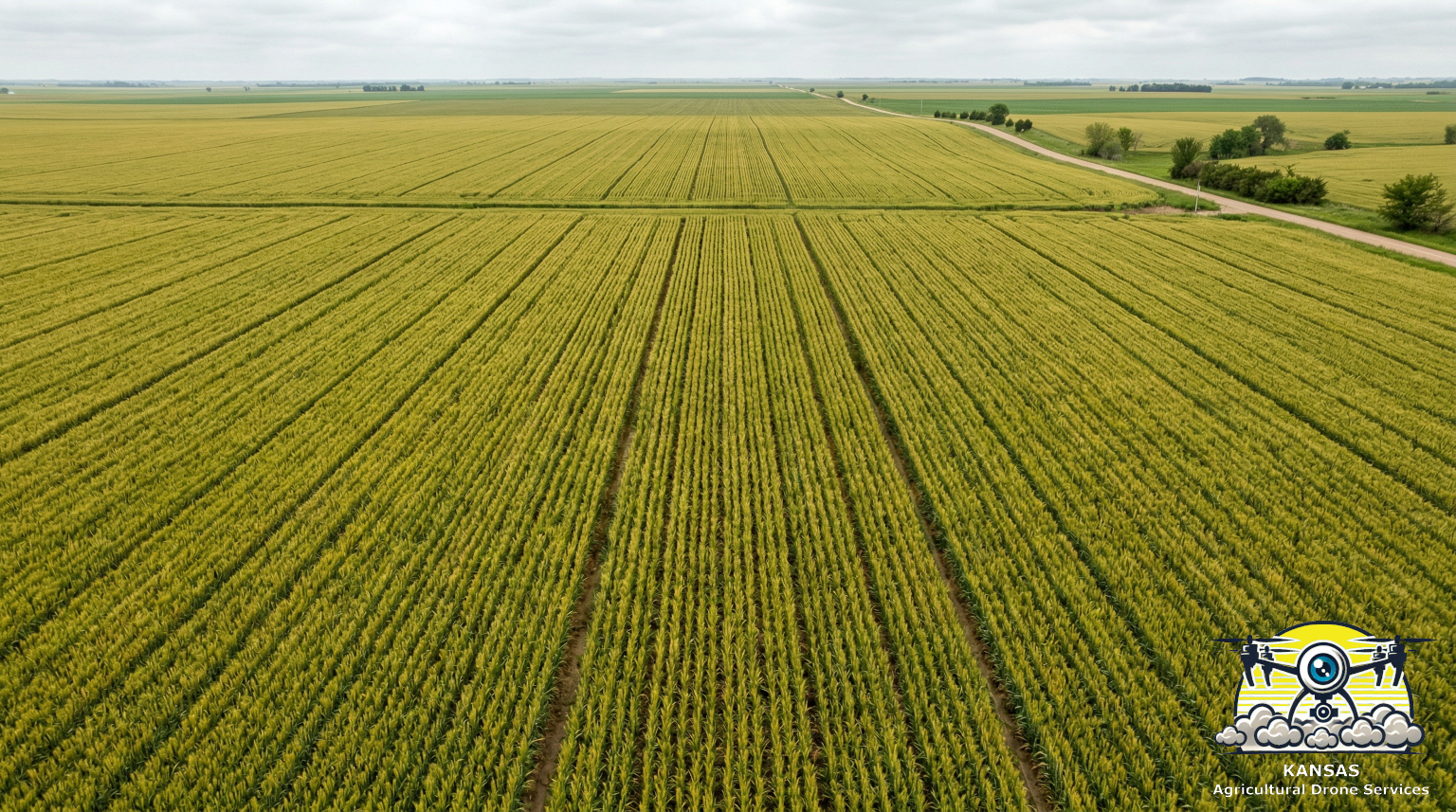
May is the time: Walk a Northeast Kansas what field and you’ll spot heads pushing out of the boot, awns just beginning to emerge, and acres upon acres of winter wheat poised at a critical growth stage. For Kansas wheat producers May holds the opening of the most important and most time-sensitive spray window of the entire growing season.
The NE Kansas spring fungicide window is open.
From Brown County south through Doniphan, Nemaha, and Marshall counties, wheat fields typically enter Feekes 10.5 in May. Once the heads begin to emerge, growers have a narrow 7 to10 day opportunity to maximize treatment. Miss it, and disease pressure — particularly Fusarium head blight and stripe rust — can erase a significant portion of yield and quality before harvest ever arrives.
Why Fungicide Timing Is the Most Important Decision You’ll Make This Spring
Ask any Kansas State University Extension agronomist and they’ll give you the same answer: fungicide timing matters more than product selection. A well-timed application of a mid-grade product will consistently outperform an expensive premium fungicide applied a week too late. This holds true every season, and it is especially true in a spring like this one, where disease conditions across Northeast Kansas have been building since April.

For NE Kansas winter wheat, the target application window is Feekes 10.5.1 when 50% or more of heads have fully emerged from the flag leaf sheath and anthers are visible. Don’t wait for Feekes 10.5.3, when flowering is roughly 50% complete. This window typically spans 5 to 7 days for any individual field, though field-to-field variation across a farm operation can extend the overall window a few days.
Fields at lower elevations or with southern exposure will head slightly earlier. A 500-acre wheat operation in Nemaha County, for example, might have fields ranging from Feekes 10.3 to Feekes 10.5.1 simultaneously — which is precisely why the flexibility of drone application provides a planning advantage over other methods.

Stripe Rust and Scab: The Two Diseases Driving Kansas Fungicide Decisions This Season
Stripe Rust Pressure in Northeast Kansas
Stripe rust (Puccinia striiformis) has been one of the most economically damaging foliar diseases in Kansas winter wheat over the past decade. The disease thrives in cool, moist conditions, which is the typical weather that dominates Northeast Kansas through April and into early May. When stripe rust is active in the lower canopy before heading, growers must act before the disease advances into the flag and flag-1 leaves, which together provide the the majority of photosynthate that fills the grain.
If you are walking your NE Kansas fields this week and seeing yellow-orange pustules on lower or mid-canopy leaves, the economic threshold has very likely already been reached. A triazole-based fungicide or a strobilurin-triazole premix applied at heading will arrest disease progress and protect the flag leaf through the critical grain fill period.
Fusarium Head Scab: The Timing-Sensitive Threat
Fusarium head blight — commonly called scab — is the most economically damaging wheat disease in years with wet, humid conditions during flowering. Unlike stripe rust, scab infection occurs specifically during anthesis, when wheat is actively flowering and anthers are exposed. This biology is why fungicide timing is so unforgiving: applications made before anthesis begins or more than six days after flowering provides significantly reduced efficacy against scab infection.
The Wheat Scab Risk Assessment Tool, maintained by the U.S. Wheat & Barley Scab Initiative, has indicated moderate-to-high infection risk for flowering-period scab in parts of North East Kansas this spring, based on recent precipitation and relative humidity data. When scab risk is elevated, hitting the Feekes 10.5.1 window precisely becomes the difference between a worthwhile Kansas fungicide investment and an application that does little to protect your crop.
The Drone Advantage for NE Kansas Spring Fungicide Applications
This is where drone application fundamentally changes what is possible for Kansas wheat producers — and it is why growers across North East Kansas are booking drone applications earlier each season rather than waiting to see if ground equipment can get in.
Speed, at the Moment Speed Is Everything
A ground sprayer covering 80–120 acres per day, accounting for boom setup, field access logistics, and soil condition limitations, simply cannot match the pace of a commercial drone operation during a narrow 7-day heading window. Kansas Ag Drone Solutions operates multi-drone fleets capable of covering 300–500+ acres per day under optimal field conditions. When your fungicide timing window opens Tuesday morning and closes Sunday evening, that speed differential determines whether your application is timely or too late.
No Compaction, No Wheel Track Damage
May in Northeast Kansas can be wet. Ground rigs navigating wet soils during heading leave ruts that damage crown root systems and reduce yield in wheel tracks for the rest of the season. Drone application eliminates compaction risk entirely — a meaningful consideration after a spring with above-normal soil moisture across much of Brown, Doniphan, and Nemaha counties.
Canopy Penetration Where It Counts
Modern agricultural drones do not simply spray from above. Downwash from their rotors actively pushes spray solution down into the crop canopy. For Kansas fungicide applications targeting Fusarium scab, where coverage of the wheat head itself is critical, rotor downwash has been shown in university application studies to achieve canopy penetration comparable to conventional aerial application — and in dense canopy conditions, superior to some ground boom configurations.
Access to Every Acre
Many NE Kansas wheat fields border drainage areas, waterways, or contain wet low spots that ground equipment cannot safely navigate. Drones operate without field access limitations. If the crop needs fungicide timing hit at Feekes 10.5.1, the drone reaches it — corner to corner, edge to waterway.
Scouting Checklist Before You Schedule Your Application
Before booking your drone application, take 15 minutes to walk several points in each field and confirm the following.
Heading stage — Are 50% or more of heads fully emerged from the flag leaf sheath? Anthers visible? You are in the window.
Stripe rust presence — Check lower and mid-canopy leaves carefully for yellow-orange pustules. Any active infection in susceptible varieties warrants immediate action.
Variety susceptibility — Cross-reference your variety against current KSU disease ratings. Susceptible varieties narrow your tolerance for any application delay.
Weather forecast — Allow at least 1–2 hours of drying time after application before any rainfall. Wind under 10 mph is optimal for drone application uniformity.
Field boundaries — Note power lines, trees, waterways, or soft spots that will affect drone flight path planning and help your operator schedule the job efficiently.
Located in or near NE Kansas?
My service area covers Brown, Doniphan, Nemaha, Marshall, Washington, and surrounding counties. Spray days get crunched as wheat heads out and rain comes in… open spots fill quickly!
Visit kads.tech to request a quote or book a flight. Same-day and next-day scheduling is available. Early morning and evening slots are open to take advantage of optimal temperature and wind conditions.
Do not let the window close. The difference between a timely and a late fungicide application in North East Kansas winter wheat can exceed 10–15 bushels per acre — at current prices, that per acre swing in net return can add up!
The Bottom Line on Kansas Fungicide Timing
NE Kansas spring fungicide applications can make a difference. Disease pressure is real, the heading window is open, and the clock is running. Fungicide timing — landing your application at Feekes 10.5 to 10.5.1 — is the single most important factor determining whether your investment produces a return.
Drone application through KADS gives you the speed, access, and canopy-level precision to execute your Kansas fungicide program within the optimal window, regardless of ground conditions or the tight scheduling demands of a whole-farm heading window compressed into one week.
The window is open. Let’s get it done.