Key Takeaways
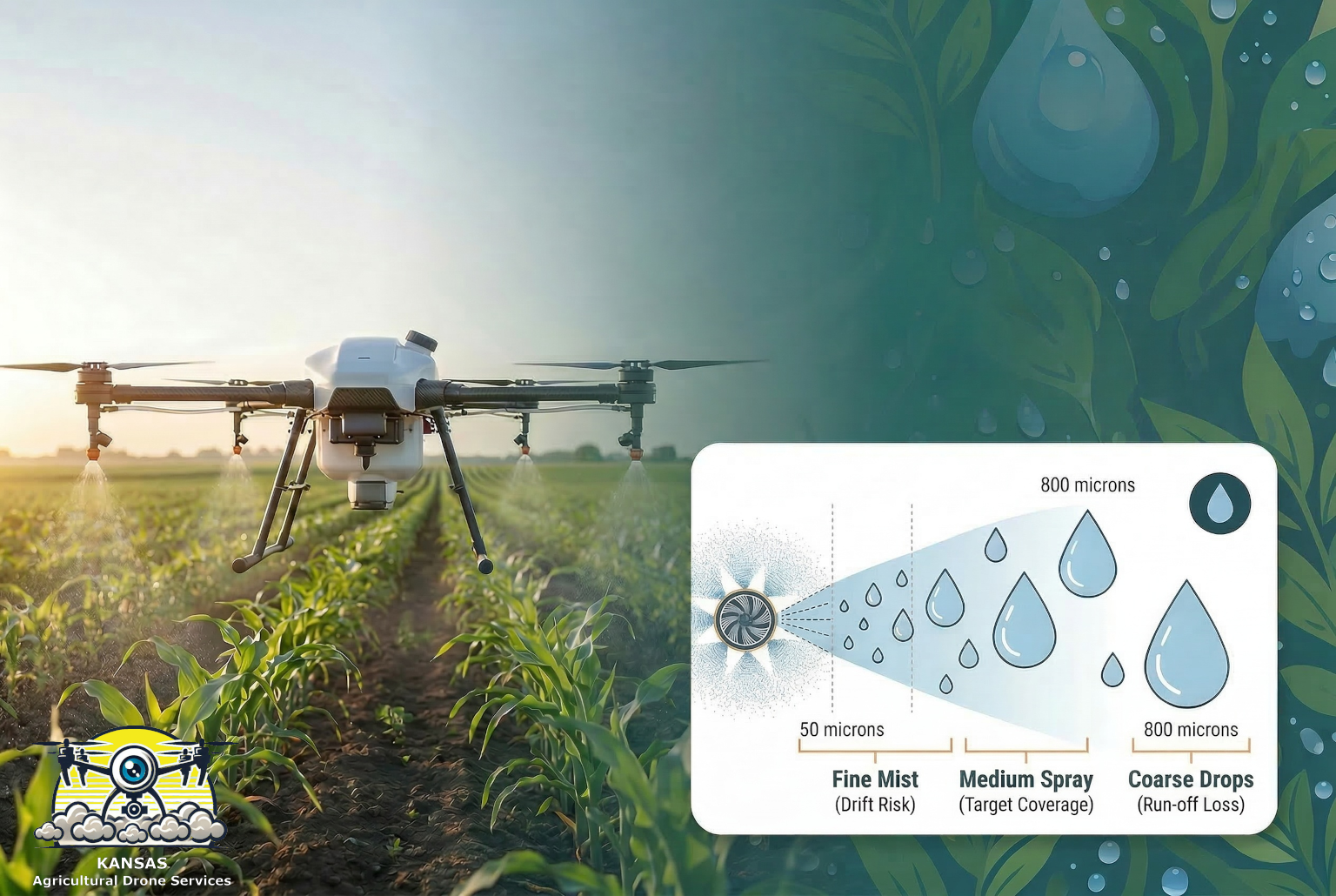
- Droplet size is crucial for effective drone spraying; it affects coverage and drift significantly.
- Small droplets provide more coverage but drift more, while large droplets minimize drift at the cost of coverage.
- Different spraying jobs require different droplet sizes: fine for coverage, medium for balance, and coarse for sensitive areas.
- Most biological products benefit from medium to coarse droplets to avoid damage and ensure effectiveness.
- Controlling droplet size allows for better results in various agricultural applications; experimentation is essential.
When people talk about agricultural spray drones, they usually focus on tank size, battery life, or acres per hour. Those things matter, but they’re not the whole story. The real key to controllable drone spraying is droplet size. If you don’t get that right, nothing else works the way it should.
Allow me to break this down in plain language.
What Droplet Size Actually Is
Droplet size is the physical size of a drop of product. It is measured in microns. One micron is one‑thousandth of a millimeter. You don’t need to memorize that, just remember this:
- Small droplets = more coverage, more drift
- Big droplets = less drift, less coverage
That’s the whole game.
Drone Nozzles Work Differently Than Boom Nozzles
A ground rig pushes liquid through a nozzle using pressure.
A drone uses:
- Pressure
- Airflow from rotors
- High-speed atomization

That rotor airflow breaks droplets apart. It’s why drones can make very fine droplets even at low pressure. You have very fine control so you must match your droplet size to the job.
Coverage vs. Drift: Finding the Sweet Spot
Different jobs need different droplet sizes.
- Fine droplets
Great for coverage. Not great for wind.
Think: fungicides on dense canopies. - Medium droplets
Good balance. Most drone work fits here. - Coarse droplets
Less drift. Less coverage.
Think: sensitive areas or windy days.
The trick is choosing the right size for the crop, the product, and the weather.
Biologicals and Droplet Size
Most biological products prefer medium to coarse droplets.
They don’t like being shredded into ultra‑fine mist.
They work better when they land gently and stay alive.
This is one reason drones pair so well with biologicals — you can tune droplet size to protect the product.
Real Midwest Examples
- Late‑season corn fungicide:
Medium droplets give good canopy penetration without drifting into the neighbor’s beans. - Soybean insecticide rescue pass:
Fine‑medium droplets help hit the pests hiding under leaves. - Biological foliar feed:
Medium‑coarse droplets reduce stress on the product.
Bottom Line
Droplet size is the heart of drone spraying. If you control the droplets, you control the results. Experiment and see what works with different products, flight speed, and wind conditions.
Good luck!!