Key Takeaways
- Agricultural drones transform micronutrient application by providing precision, speed, and field access across varying growth stages.
- Drone applied micronutrients enhance early plant development, prevent mid-season stalls, and protect yield during flowering and pod fill.
- Drones can apply nutrients without causing soil compaction or crop damage, allowing treatment of stressed zones even after rain.
- Farmers see improved yield through better pollination and pod retention from targeted drone applications of micronutrients.
- Cost-effectiveness increases as drones minimize waste and enhance return on investment compared to conventional ground rigs.
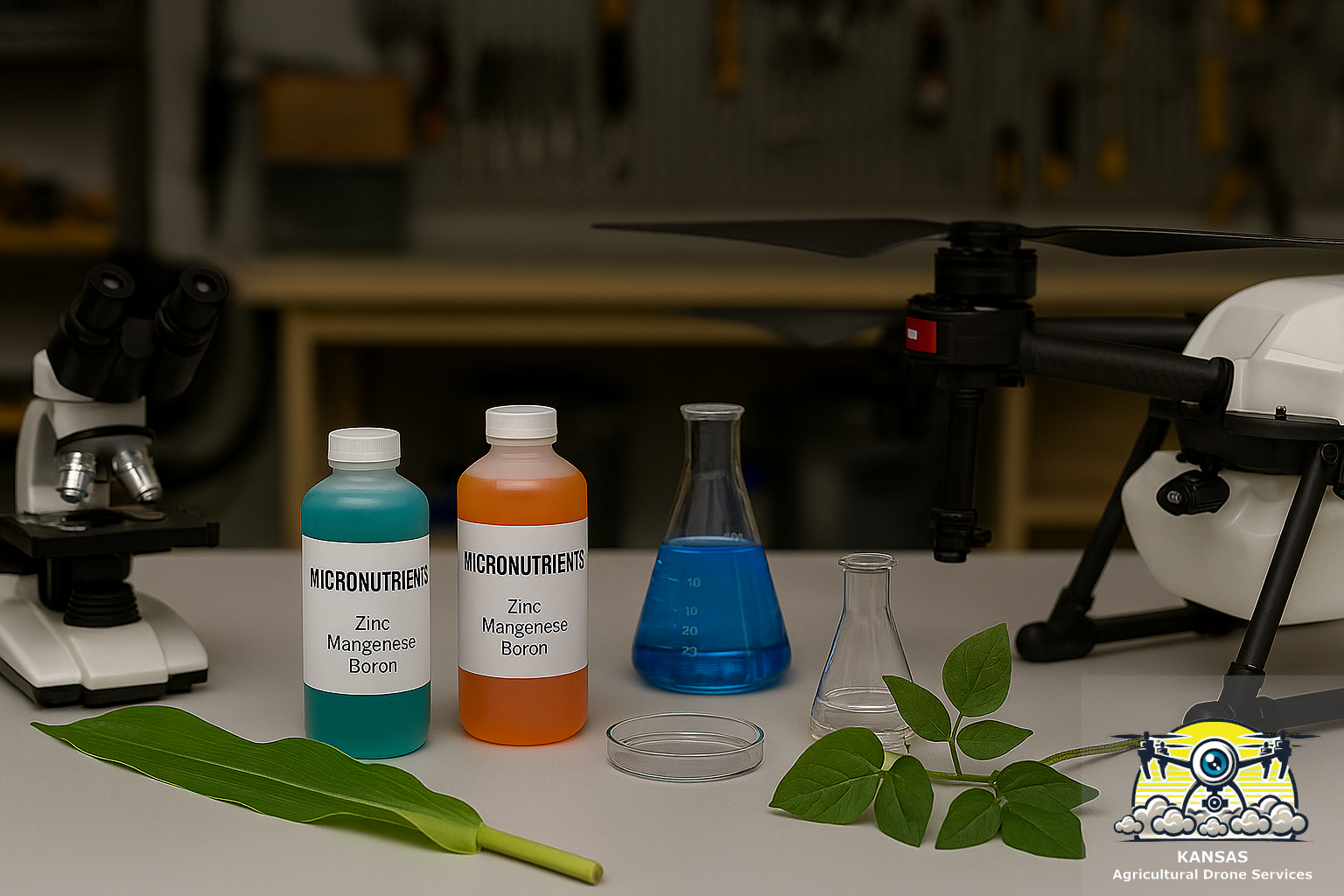
Across the central Midwest, growers face unpredictable weather, rising input costs, and the pressure to get more out of every acre. One of the most reliable ways to strengthen crop performance is through timely micronutrient application, and agricultural drones are transforming how these nutrients reach corn and soybeans. At Kansas Agricultural Drone Services (KADS), we deliver drone‑applied micronutrients with unmatched precision, speed, and field access.
Early Vegetative Stage: Establishing a Strong Start
During early growth—corn V3 to V6 and early vegetative soybeans—the crop is building root structure, early leaf area, and the metabolic foundation that determines long‑term performance. Key micronutrients such as zinc, manganese, and boron support early photosynthesis, root expansion, and stress resilience.
Drone application allows these nutrients to be placed exactly where they are needed. High‑pH zones, sand streaks, compacted areas, and historically weak spots can be treated without covering the entire field. Because drones never touch the soil, there is no compaction, no scheduling delays, and no wasted product. The result is more uniform early growth and fewer weak areas that limit yield later in the season.
Rapid Growth Stage: Meeting Peak Micronutrient Demand
As corn enters V7–V12 and soybeans accelerate node development, the crop’s demand for micronutrients increases sharply. Deficiencies in manganese, iron, zinc, or sulfur can quickly stall growth—especially when cloudy weather, saturated soils, or heat stress tie up nutrients in the soil.
This is where agricultural drone spraying excels. Drones can fly immediately after rain, when traditional equipment cannot enter the field. They can also treat only the zones showing stress on imagery or scouting reports, maximizing efficiency and minimizing cost. An 80‑acre field can be treated in a fraction of the time required by conventional equipment.
For growers, the benefit is clear: preventing mid‑season nutrient stalls that permanently reduce yield potential. Drone‑applied micronutrients keep the crop moving forward during its most critical growth period.
Reproductive Stage: Protecting Yield Potential
Once corn reaches tassel and soybeans begin flowering, the focus shifts from building yield to protecting it. Boron becomes especially important for pollination, pod set, and seed fill. Manganese and iron may still be limiting in soybeans, particularly in high‑pH soils common across Kansas, Nebraska, and Missouri.
Drone application allows micronutrients to be applied alongside fungicides or biologicals without crop damage or missed field edges. Drones can also target areas recovering from early stress, giving them the nutritional support needed to finish strong.
Farmers often see improved pollination in corn, stronger pod retention in soybeans, and more complete kernel fill—direct contributors to higher yields.
Late Season: Preserving Yield and Finishing the Crop
Late‑season micronutrient applications are less about building yield and more about preserving it. In soybeans—especially high‑yield environments—a late pass of boron or manganese can help maintain plant health long enough to finish filling pods. Drones make this possible because they do not damage tall crops the way ground rigs do.
Why Drone‑Applied Micronutrients Matter
Micronutrients may be required in small amounts, but their impact on crop performance is significant. When applied at the right time, they support stronger early development, prevent mid‑season stalls, and protect yield during reproduction and grain fill.
What has changed the game is drone application—finally giving growers the timing, precision, and field access needed to make micronutrient programs truly effective. No ruts, no scheduling delays, and no wasted product. Just targeted nutrition delivered exactly when the crop needs it.
Additional content is below. Feel free to print these and use them for reference.
Anything that could increase input costs requires careful review. The (potential) return on investment should be considered. This checklist is best used to target certain operations, track the costs, and confirm the benefit in the post-season review. I think that this checklist is as useful for me, or another applicator, as it is for the farmer.
1. Pre‑Season Prep
- Review soil tests for Zn, Mn, Fe, B, S
- Identify high‑pH zones, sand streaks, and compacted areas
- Load field boundaries and variability maps into the drone system
- Select micronutrient products compatible with drone spraying
2. Early Vegetative Pass (Corn V3–V6 / Soy Early Veg)
- Target zinc, manganese, boron
- Prioritize weak zones visible on imagery
- Verify weather: low wind, no inversion
- Fly early morning or evening for best uptake
3. Rapid Growth Pass (Corn V7–V12 / Soy Mid‑Veg)
- Evaluate crop color, imagery, and tissue tests
- Apply manganese, iron, zinc, or sulfur as needed
- Use zone‑specific rates to avoid over‑application
- Fly immediately after rain if ground rigs cannot enter
4. Reproductive Pass (Corn Tassel / Soy Flowering)
- Add boron for pollination and pod set
- Combine with fungicide or biologicals if desired
- Treat field edges and historically missed areas
- Confirm droplet size and coverage for canopy penetration
5. Late‑Season Pass (Soybean Pod Fill)
- Apply boron or manganese to maintain plant health
- Avoid ground traffic to prevent lodging or damage
- Fly during cooler parts of the day for best absorption
6. Post‑Season Review
- Compare yield maps to application zones
- Document ROI for each micronutrient pass
- Update next year’s variable‑rate plan
Micronutrients are essential elements—such as zinc, manganese, boron, iron, and sulfur—required in small amounts but critical for plant growth, stress tolerance, and yield development.
Agricultural drones provide precise, timely application without soil compaction, crop damage, or scheduling delays. They can fly after rain, treat only stressed zones, and reach areas ground rigs cannot.
Yes. When applied at the correct growth stage, micronutrients support early vigor, prevent mid‑season nutrient stalls, and improve pollination, pod retention, and kernel fill.
Absolutely. Drone spraying allows micronutrients to be tank‑mixed with fungicides or biologicals, improving efficiency and reducing passes across the field.
Most Midwest growers benefit from 2–3 passes: early vegetative, rapid growth, and reproductive. High‑yield soybean programs may include a late‑season pass.
Yes. Drones reduce wasted product, eliminate compaction, and allow targeted zone application—improving ROI compared to blanket ground‑rig passes.