Key Takeaways
- Agricultural drones are revolutionizing livestock monitoring by offering real-time location tracking and counting capabilities.
- Drones equipped with thermal cameras help monitor animal health and behavior, identifying issues before they escalate.
- Farmers can manage pastures more efficiently using drones to assess grazing patterns and monitor water sources.
- Drones enhance security by detecting predators and monitoring for unusual activity on livestock properties.
- Investing in drones can lead to significant cost savings and improved efficiency for livestock operations.
If you’re raising cattle, sheep, goats, or other animals in your livestock operations, across the sprawling pastures of America, you know how challenging it can be to keep track of your animals. Walking miles of fence line, driving ATVs across rough terrain, and spending hours searching for missing cattle are just part of the job. But what if there was a smarter way to monitor your herd? That’s where agricultural drones come in, and they’re changing the game for livestock producers across the heartland.
The technology of modern farming has come a long way from the days when ranchers relied solely on horseback and intuition. Today’s agricultural drones offer farmers and ranchers powerful tools to monitor their livestock more efficiently, safely, and cost-effectively than ever before. Whether you’re managing a few hundred head of cattle or running a large commercial operation, drone technology can help you stay on top of your herd’s health, location, and overall well-being.
Real-Time Livestock Location and Counting
One of the biggest headaches for any livestock producer is knowing exactly where your animals are at any given time. Cattle have a knack for finding holes in fences, wandering into neighboring properties, or clustering in hard-to-reach corners of your land. Traditional methods of counting and locating livestock involve hours of manual labor, often in harsh weather conditions.
Drones equipped with high-resolution cameras can cover vast areas of pasture in a fraction of the time it would take on foot or horseback. These aerial views give you a bird’s-eye perspective of your entire operation, making it easy to spot animals that might be hidden behind trees, in gullies, or scattered across large fields. Many modern agricultural drones can fly pre-programmed routes, systematically covering your entire property while you focus on other farm tasks.

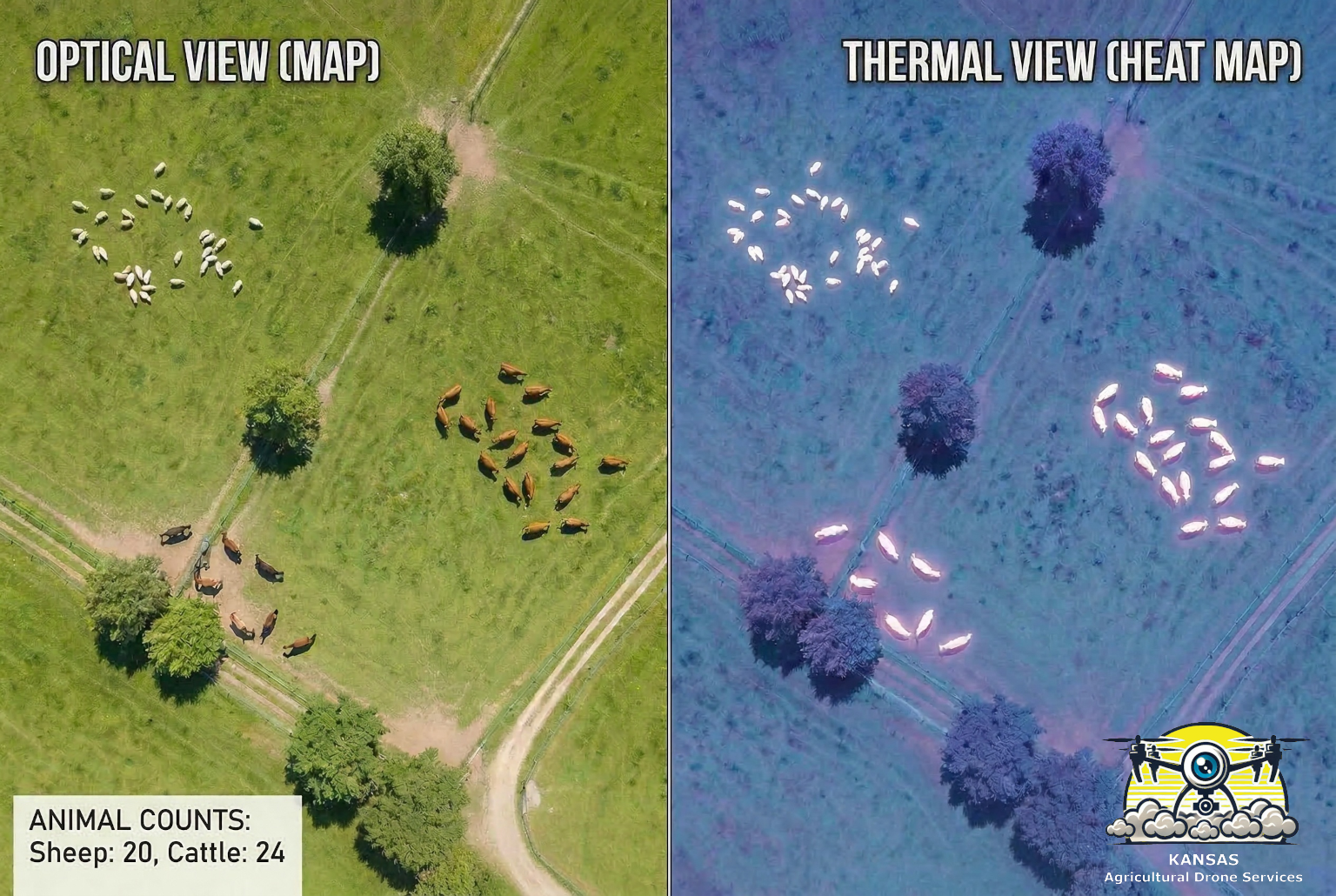
The counting capabilities of drone technology are particularly impressive. Instead of spending hours trying to get an accurate head count, you can review drone footage to ensure all your animals are accounted for. This is especially valuable during calving season when newborns might be tucked away in tall grass or during harsh weather when animals seek shelter in unexpected places.
Some advanced drone systems even use artificial intelligence to automatically count livestock and identify different species or age groups. This technology can save ranchers significant time and provide more accurate records for management decisions.
Health and Behavioral Monitoring
Keeping your livestock healthy is crucial for both animal welfare and your bottom line. Sick or injured animals can quickly become expensive problems if not identified and treated promptly. Drones provide an excellent way to monitor animal behavior and identify potential health issues before they become serious.

From the air, you can easily spot animals that are limping, lying down when they should be grazing, or separated from the herd – all potential signs of illness or injury. Cattle that are acting lethargic, not moving with the group, or showing other unusual behaviors can be quickly identified and given the attention they need.

Thermal imaging cameras mounted on drones punch far above their weight in livestock operations, because the thermal camera adds another layer of health monitoring capability. These cameras can detect changes in body temperature that might indicate fever or other health issues. While thermal imaging requires some investment in specialized equipment, it can be incredibly valuable for early disease detection, especially in larger herds where individual animal monitoring becomes challenging.
Drone monitoring also helps you track breeding behavior and identify when animals are in heat or ready for breeding. This information is crucial for maintaining productive breeding schedules and maximizing your operation’s efficiency.
Pasture and Grazing Management
Good pasture management is essential for sustainable livestock production. Overgrazing can damage your land for years, while underutilizing good pasture means missing out on free feed for your animals. Drones provide valuable insights into both your pasture conditions and how your livestock are using the available grass.

Aerial surveys can reveal areas where grass is being overgrazed, spots that aren’t being utilized, and sections that might need reseeding or other improvements. You can use this information to make better decisions about when to move animals between pastures and how to distribute them for optimal grass utilization.
Water source monitoring is another critical application. Drones can quickly check stock tanks, ponds, and automatic waterers across your property without requiring long trips to remote locations. Ensuring adequate water access is vital for animal health, and drone monitoring helps you identify problems with water systems before they affect your livestock.
The ability to map and analyze grazing patterns also helps with long-term land management decisions. By understanding how your animals naturally move across the landscape, you can make improvements to fencing, water placement, and pasture rotation schedules that benefit both your livestock and your land.
Security and Predator Detection
Livestock security is a growing concern for producers. Cattle theft, while not as common as in the old West, still costs ranchers thousands of dollars each year. More commonly, predators like coyotes, wild dogs, or even large birds can threaten young livestock, especially during calving or lambing seasons.
Drones equipped with night vision or thermal cameras can patrol your property during vulnerable hours, providing an extra set of eyes when you can’t be there personally. Some systems can even be programmed to send alerts to your phone when they detect unusual activity or animals where they shouldn’t be.
For predator management, drones offer a non-invasive way to monitor wildlife activity around your livestock areas. You can identify predator travel patterns, den locations, and peak activity times without spending hours in a blind or walking potentially dangerous terrain at night.
The mere presence of drone activity can also serve as a deterrent to both predators and potential thieves. Regular aerial patrols create the impression of constant surveillance, which may encourage unwanted visitors to look elsewhere for easier targets.
Emergency Response and Search Operations
When livestock go missing during storms, break through fences, or wander into dangerous areas, time is critical. Traditional search methods can take hours or even days, especially in rough terrain or during bad weather. Drones can dramatically reduce search times and help locate animals that might otherwise be lost.
During severe weather events, drones can assess animal welfare and property damage without putting human safety at risk. After storms, you can quickly survey your entire operation to identify downed fences, damaged buildings, injured animals, or livestock that may have been scattered by high winds or flooding.
Emergency medical situations also benefit from drone monitoring. When you identify an injured animal from the air, you can direct veterinary care to the exact location quickly and efficiently. This capability is especially valuable on large ranches where getting help to remote locations can be challenging.

Search and rescue operations for missing animals become much more systematic with drone assistance. Instead of randomly searching likely areas, you can create grid patterns that ensure complete coverage of your property and neighboring areas where animals might have wandered.
Cost Savings and Efficiency Benefits
While investing in drone technology requires upfront costs, the long-term savings for livestock operations can be substantial. Consider the fuel costs of driving ATVs or trucks across rough pasture multiple times per week, the wear and tear on vehicles, and the time investment required for manual monitoring.
A single drone flight can accomplish what might take several hours of ground-based checking. This efficiency translates directly into cost savings and allows you to spend time on other important farm tasks. The ability to quickly locate and count animals also improves record-keeping accuracy, which is increasingly important for insurance claims, government programs, and marketing decisions.
Labor savings are particularly significant for smaller operations where every hour counts. Instead of hiring additional help for livestock monitoring, many producers find that drone technology allows them to manage larger herds or more acreage with existing labor resources.
Early problem detection, whether it’s health issues, fence breaks, or water system failures, prevents small problems from becoming expensive disasters. The cost of treating a sick animal early is much less than dealing with disease outbreaks, and fixing a small fence break is cheaper than recovering scattered cattle from neighboring properties.
Getting Started with Livestock Monitoring Drones
If you’re considering adding drone technology to your livestock operation, start by identifying your primary needs and challenges.
- Are you spending too much time locating animals?
- Having trouble monitoring animal health across large areas?
- Dealing with predator problems?
Understanding your specific goals will help determine what type of drone system will work best for your operation.
Basic livestock monitoring can be accomplished with relatively affordable consumer drones equipped with good cameras. However, professional agricultural drone systems offer advantages like longer flight times, weather resistance, and may include specialized software for data analysis.
Consider starting with a service provider before purchasing your own equipment. This approach allows you to see firsthand how drone technology can benefit your specific operation without the initial investment in equipment and training. Once you understand the value and applications, you can make informed decisions about purchasing your own drones. Also note, the cost of hiring someone may provide an R&D tax credit!
Training and certification requirements vary depending on your intended use and the size of drone you plan to operate. The Federal Aviation Administration provides detailed guidance on commercial drone operations, which typically apply to agricultural use.
Using Drones can reduce your tax!
Section 41 of the TAX code allows some of the cost R&D activities to turn into a TAX Credit. Testing new techniques is encouraged by the Government, and use of drones or hiring a drone service is an allowable activity.
Final Thoughts
Drone technology can revolutionize livestock monitoring. From basic animal counting and location tracking to sophisticated health monitoring and predator detection, these aerial tools offer practical solutions to everyday challenges faced by livestock producers. As the technology continues to improve and costs decrease, drones are becoming accessible to operations of all sizes.
The key to success with agricultural drones is matching the technology to your specific needs and learning to integrate it effectively into your existing management practices. Whether you’re running cattle on thousands of acres or managing a smaller diversified livestock operation, drone applications can help you work smarter, save money, and take better care of your animals.
For producers looking to stay competitive and sustainable, investigating drone technology for livestock monitoring isn’t just about keeping up with trends – it’s about embracing tools that can make your operation more efficient for years to come. According to the U.S. Department of Agriculture, precision agriculture technologies like drones are increasingly being adopted by farmers seeking to optimize their operations and improve animal welfare standards.
As research from Extension.org continues to demonstrate, the integration of drone technology in livestock management represents a significant opportunity for improved productivity and animal care across American agriculture.
Stay tuned in, and stay in touch. Reach out to Mike to start a conversation about your needs.