Key Takeaways
- Fungicide application by drone offers effective yield protection for Midwest corn and soybeans by enhancing canopy penetration.
- Drones ensure uniform coverage through low flying and airflow, allowing deeper droplet delivery into the plant structure.
- Optimal timing for corn is VT–R1 and for soybeans is R2–R3, maximizing disease management without damaging crops.
- Achieving strong canopy penetration depends on medium droplet size, low steady flight, proper speed, and aligned flight paths.
- Spray drones provide advantages like no soil compaction, precise applications, and better penetration in challenging fields.
Fungicide application by drone is rapidly becoming one of the most effective tools for protecting yield in Midwest corn and soybeans. With the right timing, droplet size, and flight strategy, spray drones can deliver exceptional foliar fungicide coverage while avoiding the soil compaction and crop damage caused by ground rigs. The key is understanding how to maximize a core advantage of agricultural drones: Canopy penetration—getting droplets past the top leaves and into the mid‑ and lower canopy where disease often begins.
🌱 Why Spray Drone Application Works
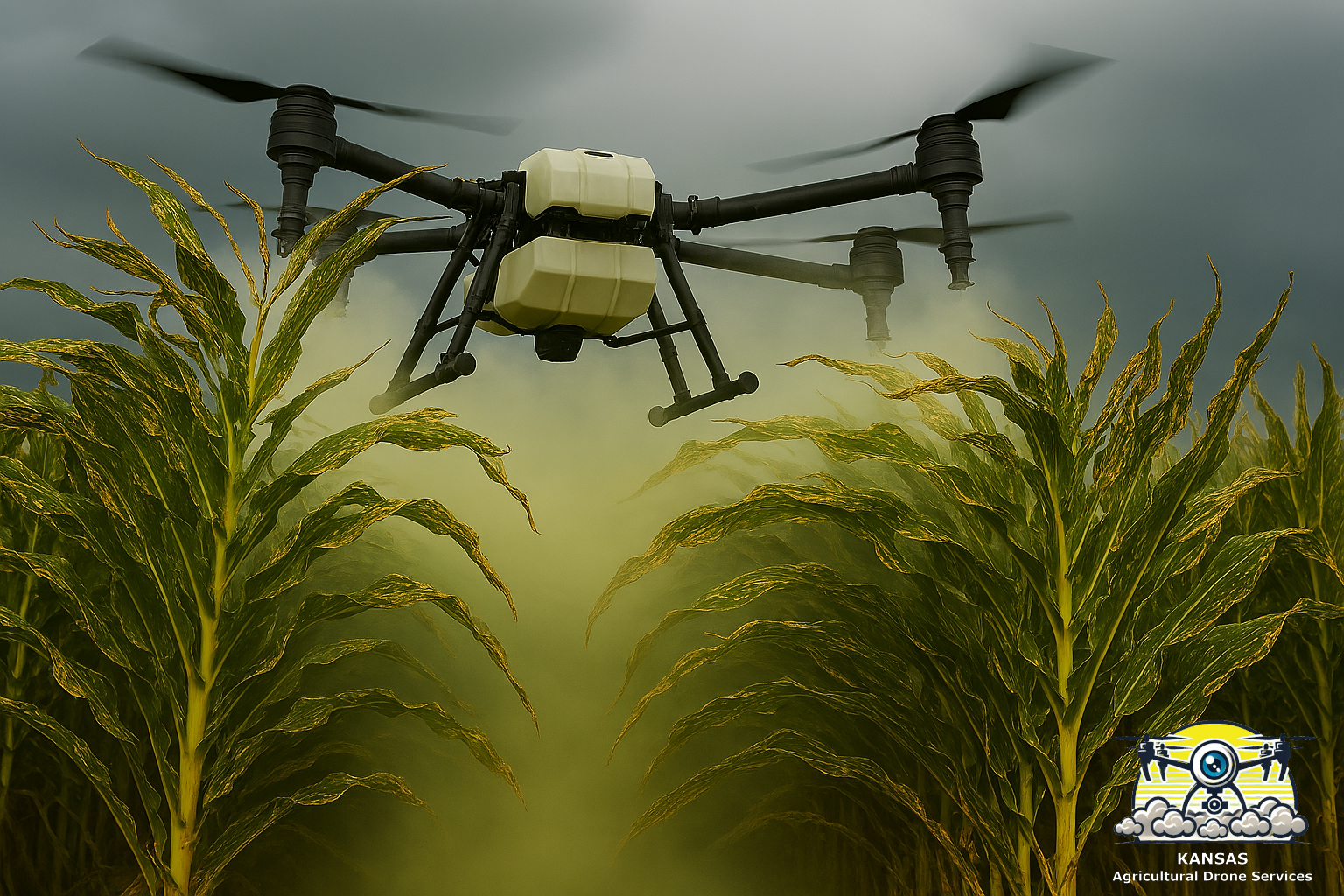
Agricultural spray drones excel at delivering uniform coverage because they fly low, maintain consistent speed, and use downward rotor wash to push droplets deeper into the canopy. They actually move the plants around, even exposing the bottom of larger leaves to the product. This “air-assist effect” is one of the biggest advantages of fungicide application by drone. Instead of relying on high carrier volumes or boom pressure, drones use rotor downwash to drive droplets into the plant structure, improving deposition on both upper and lower leaf surfaces.
⏱️ Fungicide Timing Matters
Optimal fungicide timing is still the foundation of a successful application.
- Corn: VT–R1 is the gold standard for protecting the ear leaf, tassel, and silks. Drone application at this stage ensures excellent coverage without running down tall corn.
- Soybeans: R2–R3 is the sweet spot for managing white mold, frogeye leaf spot, and other foliar diseases. Drones can fly above dense canopies without disturbing rows or causing lodging.
- Field Edges: Because disease often starts along tree lines and waterways, drones are ideal for targeted edge passes or rescue applications when ground rigs can’t enter, or when other methods of aerial application avoid edges. Correct timing paired with drone precision helps growers protect yield and reduce wasted product.
Plan ahead and communicate with your applicator! Save your time slot and allow flexibility for dodging weather and family events!
🌾 Maximizing Canopy Penetration
Canopy penetration is the biggest performance factor in drone fungicide application. To achieve strong penetration:
- Use medium droplets (250–350 microns).
This size balances drift control with the ability to move downward into the canopy. Too fine and droplets hang in the air; too coarse and they bounce off leaves. - Fly low and steady. Most operators target 8–10 feet above the crop. Flying lower increases rotor wash intensity and improves droplet push-through.
- Maintain proper speed. Slower speeds (12–15 mph) allow droplets more time to settle and penetrate. Faster speeds reduce deposition.
- Optimize spray volume. While drones typically apply 1–3 GPA, the key is droplet density, not gallons. With the right nozzles and droplet size, drones achieve excellent foliar fungicide coverage even at low volumes.
- Align flight paths with crop rows. This reduces turbulence and helps droplets move vertically instead of being deflected sideways.
🍃 Improving Foliar Fungicide Coverage
Coverage is not just about hitting the top leaves—it’s about reaching the infected zones. Drones help achieve this by:
- Creating uniform droplet patterns across the entire swath.
- Depositing droplets on both sides of the leaf, especially important for diseases like gray leaf spot and frogeye leaf spot.
- Reducing overlap and skips thanks to precise GPS-guided flight lines. Use RTK!
Adding a high-quality surfactant can further improve leaf adhesion and spread, especially in dense canopies or humid conditions.
🚁 Why Consider Spray Drones?
As you can see, agricultural spray drones offer several advantages over traditional ground or aerial methods. To summarize, they:
- Don’t cause soil compaction
- Don’t cause crop damage
- Allow spraying of small or irregular fields – Less than 120′ wide!
- Provide very precise application on demand – Down to an individual plant
- Provide better penetration in tall or lodged crops
- Reduce drift due to low-altitude spraying and flexible drop size
For many growers, drones are becoming the preferred tool for fungicide timing, rescue passes, and targeted applications.
Parting Thoughts
I think that Ag drones provide a lot of functionality. Fungicide application by drone is more than a convenience—it’s really a strategic upgrade for all farmers. By focusing on canopy penetration, droplet size, and proper timing, growers can achieve superior foliar fungicide coverage and protect yield more efficiently than ever before. Don’t let Tar Spot or Southern Rust get you again.